Python Remediation Suite
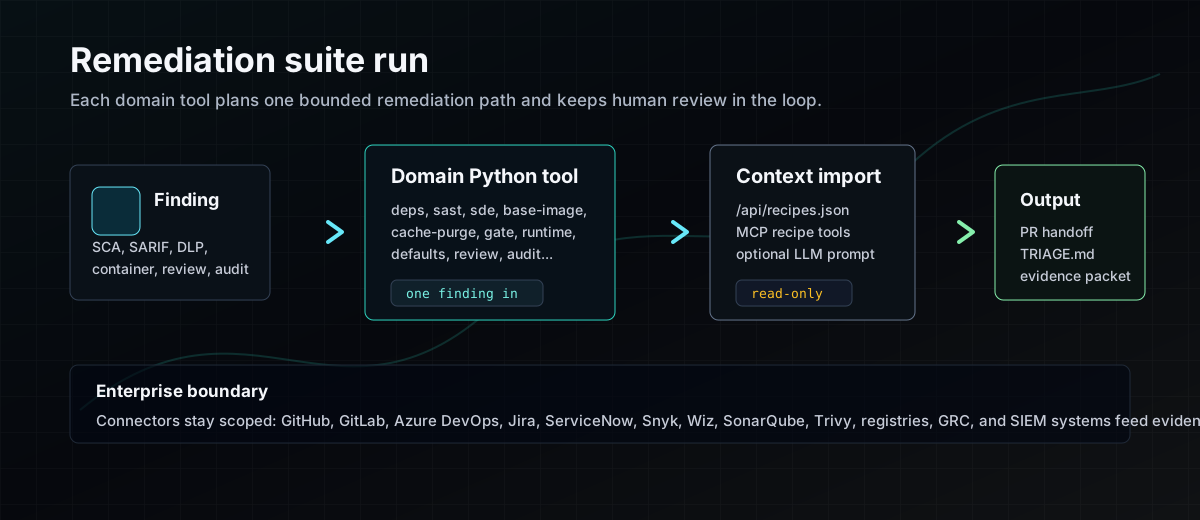
The Python remediation suite turns every playbook into a concrete, checked workflow. It does not replace scanners, ticketing systems, source control, or human reviewers. It creates the bounded packet an agent or orchestrator needs before work starts, then verifies the evidence attached to that run:
- a playbook-specific, hash-only workspace inventory;
- the finding hash and exact workflow/decision gate;
- a human-readable plan and bounded agent task;
- explicit evidence requirements and expected outputs;
- integrity-hashed test, scan, review, approval, or policy evidence;
- deterministic verification before completion is claimed.
Workflow at a glance
Python Remediation Suite workflow
Turn one finding into a validated playbook run directory containing workflow, tool, recipe, evidence, and reviewer contracts.
Signal
Start a playbook run
Validate the playbook ID, workspace, finding payload, run directory, and requested operating mode.
Scope
Normalize scenario evidence
Parse domain-specific fields, discover local files, and preserve provenance without performing side effects.
Decision
Resolve workflow assets
Load the playbook, recipes, enterprise adapters, gates, tests, file scopes, and stop conditions.
Action
Build the execution packet
Create agent instructions, optional LLM prompt/call material, evidence checklist, and deterministic metadata.
Proof
Validate the run directory
Check schema, hashes, paths, decisions, and reviewer outputs before handing work to an agent.
Decision gate
Is the playbook known and the finding sufficiently scoped for a safe, reproducible run packet?
Emit the complete run directory for agent execution and human review.
Emit a validation failure or triage packet without modifying the target workspace.
Evidence to retain
- validated finding payload
- resolved playbook/recipe manifest
- run-directory validation report
Expected outputs
- playbook run directory
- agent execution packet
- reviewer evidence checklist
Tool commands
The playbook interface covers all 75 published scenarios from the same
versioned registry that renders their workflow visuals and serves the MCP
tools. Rechecked on August 21, 2026: the registry still has 75 playbooks
and mcp_server.py still exposes 75 recipes_* tools. It uses only the
Python standard library.
# Discover and inspect the contract before touching a workspace.
python scripts/security_recipes_remediation_suite.py playbook list
python scripts/security_recipes_remediation_suite.py playbook describe \
  --playbook vulnerable-dependencies
python scripts/security_recipes_remediation_suite.py playbook inspect \
  --playbook vulnerable-dependencies --workspace .

# Create a new, version-pinned run packet for one finding.
python scripts/security_recipes_remediation_suite.py playbook start \
  --playbook vulnerable-dependencies \
  --workspace . \
  --finding finding.json \
  --run-dir .security-recipes/runs/vulnerable-dependencies

# Attach evidence by path and SHA-256; file contents are not copied.
python scripts/security_recipes_remediation_suite.py playbook record \
  --run-dir .security-recipes/runs/vulnerable-dependencies \
  --file reports/sca-rescan.json \
  --kind scanner \
  --requirement "tests and SCA re-scan"

# Exit 0 only when the packet is valid and every evidence requirement is met.
python scripts/security_recipes_remediation_suite.py playbook verify \
  --run-dir .security-recipes/runs/vulnerable-dependencies
start creates four artifacts atomically:
| Artifact | Purpose |
|---|---|
run.json |
Versioned playbook identity, finding hash, bounded inventory, and requirements. |
PLAN.md |
The five workflow phases, decision gate, evidence checklist, and outputs. |
AGENT_TASK.md |
A constrained coding-agent handoff with explicit stop conditions. |
evidence.json |
Evidence metadata, requirement mapping, size, timestamp, and SHA-256. |
Workspace discovery skips links, junctions, dependency trees, unrelated build output, and VCS data. A playbook can explicitly select a published recipe feed or prior run evidence, but traversal remains limited to that declared branch. File-count, individual-size, aggregate-size, and traversal limits are enforced before hashing. The suite never treats a matching file pattern as blanket write authorization.
Dashboard container and UI
The suite now ships with a browser workbench that sits on top of the same Python planner. The UI lets an operator:
- choose a remediation domain;
- paste free-text, JSON, or SARIF findings;
- configure recipe source, tooling hints, ecosystem, and LLM mode;
- save non-secret access and context notes inside a mounted state directory;
- generate a remediation packet and inspect the JSON plus agent handoff prompt;
- download the latest packet for CI, SOAR, ticketing, or agent handoff.
Build the dashboard image from this repo:
docker build -f Dockerfile.remediation-suite-ui -t security-recipes-suite-ui .Run it:
docker run --rm -p 8787:8787 \
  -v "$(pwd)/tmp/remediation-suite-ui:/data" \
  -e XAI_API_KEY="$XAI_API_KEY" \
  security-recipes-suite-ui
Open http://localhost:8787. The container starts:
python scripts/security_recipes_remediation_suite.py serve-dashboard \
  --host 0.0.0.0 \
  --port 8787 \
  --state-dir /data
Useful runtime environment variables:
| Variable | Purpose |
|---|---|
SECURITY_RECIPES_DASHBOARD_HOST |
Bind host for the web server. |
SECURITY_RECIPES_DASHBOARD_PORT |
Port exposed by the UI, default 8787. |
SECURITY_RECIPES_DASHBOARD_STATE_DIR |
Directory for persisted non-secret dashboard configuration. |
XAI_API_KEY |
Example API key used when the UI is set to llm-mode call with XAI_API_KEY as the configured env var. |
Health endpoint:
GET /api/healthInstall from this repo
The suite uses the Python standard library. From a checkout of
security-recipes.ai:
python scripts/security_recipes_remediation_suite.py list-domainsStart the local dashboard without Docker:
python scripts/security_recipes_remediation_suite.py serve-dashboardRun a domain-specific tool:
python scripts/security_recipes_remediation_suite.py deps \
  --finding dependabot-alert.json \
  --recipes-source public/api/recipes.json \
  --tooling github,snyk,jira \
  --ecosystem npm \
  --llm-mode prompt \
  --output out/deps-packet.json
The same suite works from CI, SOAR, a ticket webhook, a scheduled scanner job,
or an agent handoff. The command writes a JSON remediation packet by default.
Use --finding - to read a free-text, generic JSON, or SARIF finding from
standard input.
Domain planner commands
| Section | Command | Best input |
|---|---|---|
| Sensitive Data Element Remediation | sde |
DLP, secret scanning, SDE JSON |
| Vulnerable Dependency Remediation | deps |
CVE, GHSA, OSV, Dependabot, SCA, SBOM |
| SAST Finding Remediation | sast |
SARIF, CodeQL, Semgrep, SonarQube, Snyk Code |
| Base Image and Container Layer Remediation | base-image |
Trivy, Grype, container scanner, Dockerfile evidence |
| Artifact Cache and Mirror Quarantine | cache-purge |
registry, mirror, cache, or malicious-artifact advisory |
| Recipe Recommender | recommend |
any messy finding that needs routing first |
| Gatekeeping Patterns | gate |
workflow, agent identity, policy, approval data |
| Runtime Controls | runtime |
session, tool-call, proxy, egress, and telemetry data |
| Classic Vulnerable Defaults | defaults |
unsafe parser, deserialization, XML, JWT, shell, TLS patterns |
| Crypto Payments Security | crypto-payments |
wallet, address, settlement, custody, or payment-flow findings |
| DeFi and Blockchain Security | defi |
smart contract, oracle, bridge, governance, or multisig findings |
| Program Metrics and KPIs | metrics |
run records, PR data, scanner backlog, review metadata |
| Reviewer Playbook | review |
PR diff, recipe id, run receipt, tests, scans |
| Rollout and Maturity Model | rollout |
pilot state, controls, reviewer capacity, metrics |
| Compliance and Audit | audit |
run receipt, approvals, control framework, evidence request |
You can also use the generic command:
python scripts/security_recipes_remediation_suite.py plan \
  --domain auto \
  --finding finding.sarif \
  --recipes-source https://security-recipes.ai/api/recipes.json
--domain auto scores the first finding against the domain registry and chooses
the strongest match. For production dispatch, prefer an explicit command when
the scanner already knows the finding class.
Import recipes from the site
Every domain can import recipes from the built site or the public endpoint:
--recipes-source public/api/recipes.json
--recipes-source https://security-recipes.ai/api/recipes.json
Agents can also use the MCP server tools when the site is deployed with MCP:
recipes_searchrecipes_getrecipes_match_findingrecipes_playbooks_listrecipes_playbook_getrecipes_playbook_plan
The three playbook MCP tools provide the same complete workflow contract and a deterministic planning checklist without writing to a repository. The Python suite does not need MCP to run. Its legacy domain planners can import the same recipe corpus through JSON so enterprise schedulers and security platforms can use it without embedding a browser or a site-specific client.
Optional LLM assist
LLM assist is opt-in and has three modes:
| Mode | Behavior |
|---|---|
off |
No model prompt or call is attached. |
prompt |
The packet includes the domain-specific prompt for another agent to use. |
call |
The suite calls an OpenAI-compatible chat completions endpoint (default: xAI) using an API key from the configured environment variable. |
Example config:
{
  "endpoint": "https://api.x.ai/v1/chat/completions",
  "model": "grok-4.6",
  "api_key_env": "XAI_API_KEY",
  "temperature": 0.2,
  "timeout": 30
}
Run with:
python scripts/security_recipes_remediation_suite.py sast \
  --finding codeql.sarif \
  --recipes-source public/api/recipes.json \
  --llm-config llm.json \
  --llm-mode call
Use prompt mode first in regulated environments. It produces the model prompt
without transmitting data, which makes review and redaction easier.
Packet anatomy
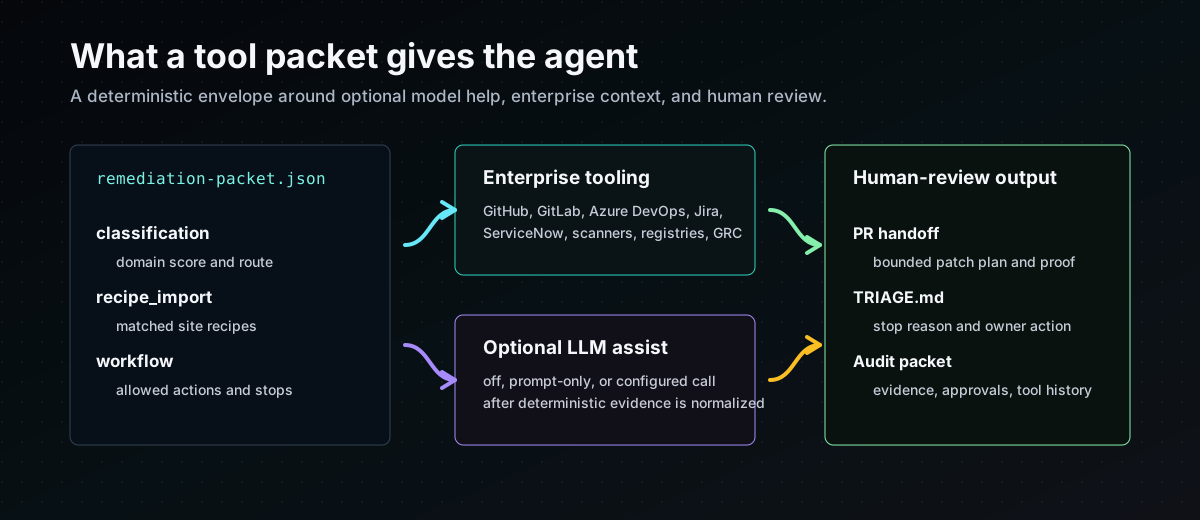
Each packet contains:
classification- domain score and routing rationale.findings- normalized finding identity, source, severity, asset, location, and raw evidence.recipe_import- recipes matched from/api/recipes.json.enterprise_tooling- compatible source control, scanner, ticketing, registry, GRC, SIEM, or platform categories.workflow- inputs, allowed actions, stop conditions, evidence, and outputs.agent_handoff- a domain-specific prompt with guardrails.llm_assist- disabled, prompt-only, or configured model-call metadata.
Enterprise integration pattern
flowchart LR
    A[Scanner or ticket] --> B[Python domain tool]
    B --> C[Import recipes JSON]
    B --> D[Normalize enterprise tooling]
    B --> E{Optional LLM?}
    E -->|off or prompt| F[Packet only]
    E -->|call| G[Configured LLM endpoint]
    F --> H[Agent runner]
    G --> H
    H --> I[PR handoff or TRIAGE.md]
    I --> J[Human review]
    J --> K[Audit evidence]

    classDef source fill:#0a2540,stroke:#00e5ff,color:#f5f7fb;
    classDef gate fill:#2a1040,stroke:#ff4ecb,color:#f5f7fb;
    classDef output fill:#1a2a1a,stroke:#86efac,color:#f5f7fb;
    class A,B,C,D source
    class E,G,J gate
    class F,H,I,K output
The integrations are intentionally broad:
- source control: GitHub, GitLab, Azure DevOps, Bitbucket;
- scanners: CodeQL, Semgrep, SonarQube, Snyk, Wiz, Trivy, Grype, OSV, Gitleaks, TruffleHog, Veracode, Checkmarx, Fortify;
- registries and artifact systems: Artifactory, Nexus, Harbor, ECR, ACR, GAR, Quay, npm, PyPI, Maven, NuGet;
- ticketing and response: Jira, Linear, ServiceNow, PagerDuty, SOAR;
- evidence and audit: Drata, Vanta, Secureframe, ServiceNow GRC, Archer, AuditBoard, SIEM and data warehouse exports.
The suite only shapes the packet. Connector credentials, write access, approval policies, and production actions stay in the enterprise control plane.
Domain reference
Python remediation tool
Sensitive Data Element Remediation
Plan a scoped remediation for secrets, tokens, PII, PCI, PHI, or internal identifiers found in current source, logs, configs, schemas, fixtures, and IaC.
python scripts/security_recipes_remediation_suite.py sdeInputs
- secret scanning, DLP, or SDE finding payload
- file path and line hint
- data class and exposure state
- approved secret store or redaction helper
Allowed actions
- replace a literal with an approved secret-store reference
- redact or hash a field through an existing helper
- drop an accidental field from a log or fixture
- write a rotation and disclosure triage note for exposed material
Stop conditions
- finding is already exposed in history, public logs, or released artifacts
- fix requires database, public API, or privacy-design changes
- no approved secret store, redaction helper, or scanner replay exists
Evidence output
- scanner result before and after
- files touched and data class
- rotation ticket or pre-exposure rationale
- test and lint command output
Enterprise adapters and example command
python scripts/security_recipes_remediation_suite.py sde \
  --finding finding.json \
  --recipes-source public/api/recipes.json \
  --tooling github,snyk,jira,servicenow \
  --llm-mode prompt \
  --output out/sde-packet.json
Python remediation tool
Vulnerable Dependency Remediation
Convert SCA, CVE, OSV, Dependabot, or SBOM dependency findings into one lockfile-safe remediation run or a bounded triage note.
python scripts/security_recipes_remediation_suite.py depsInputs
- CVE, GHSA, OSV, or vendor advisory
- dependency manifest and lockfile evidence
- package ecosystem and current resolved version
- project test command
Allowed actions
- select the lowest safe patched version
- plan package-manager-native lockfile updates
- separate direct and transitive remediation paths
- route major-version or no-fix advisories to triage
Stop conditions
- patched version crosses a direct dependency major boundary
- affected package is not present in the lockfile
- advisory is malicious-package rollback rather than forward bump
- tests or package-manager resolution cannot be reproduced
Evidence output
- advisory URL and affected range
- current and target resolved versions
- lockfile path
- test command and result
Enterprise adapters and example command
python scripts/security_recipes_remediation_suite.py deps \
  --finding finding.json \
  --recipes-source public/api/recipes.json \
  --tooling github,snyk,jira,servicenow \
  --llm-mode prompt \
  --output out/deps-packet.json
Python remediation tool
SAST Finding Remediation
Plan a narrow, testable fix for first-party code findings where source, sink, rule, and safe pattern are known.
python scripts/security_recipes_remediation_suite.py sastInputs
- SARIF or scanner JSON result
- rule id, source, sink, path, and line
- language and framework
- safe pattern or approved helper
Allowed actions
- apply one approved sanitizer, validator, encoder, authorization, or parser-hardening pattern
- add a regression test that fails before the fix
- write a triage note when data flow is ambiguous
Stop conditions
- finding spans multiple services or trust boundaries
- fix requires architecture, auth model, schema, or product behavior changes
- scanner result lacks source, sink, rule, or reproducible path
Evidence output
- rule id and SARIF location
- before and after scanner result
- test proving the vulnerable path is closed
- files touched
Enterprise adapters and example command
python scripts/security_recipes_remediation_suite.py sast \
  --finding finding.json \
  --recipes-source public/api/recipes.json \
  --tooling github,snyk,jira,servicenow \
  --llm-mode prompt \
  --output out/sast-packet.json
Python remediation tool
Base Image and Container Layer Remediation
Plan updates for vulnerable base images, OS packages, Dockerfiles, and derived image rebuilds without broad deployment changes.
python scripts/security_recipes_remediation_suite.py base-imageInputs
- container scanner finding
- image reference, digest, Dockerfile, or SBOM
- base image policy
- rebuild and smoke-test command
Allowed actions
- select patched tag or digest from approved base-image policy
- plan a Dockerfile or lockstep manifest update
- require image rebuild, rescan, and startup smoke test
- split curated-base and downstream-refresh work
Stop conditions
- image is built outside the repo
- base image is not on the approved publisher list
- fix requires production rollout, migration, or runtime privilege changes
- scanner cannot rescan the rebuilt image
Evidence output
- old and new image digest
- scanner result before and after
- Dockerfile and deployment manifests touched
- smoke-test result
Enterprise adapters and example command
python scripts/security_recipes_remediation_suite.py base-image \
  --finding finding.json \
  --recipes-source public/api/recipes.json \
  --tooling github,snyk,jira,servicenow \
  --llm-mode prompt \
  --output out/base-image-packet.json
Python remediation tool
Artifact Cache and Mirror Quarantine
Plan quarantine, deny-listing, and cache purge activity for compromised packages, images, mirrors, build caches, and CI artifacts.
python scripts/security_recipes_remediation_suite.py cache-purgeInputs
- compromised artifact identity
- registry, mirror, or cache location
- artifact digest or exact version
- consumer inventory
Allowed actions
- identify exact artifact coordinates
- plan deny-list, mirror removal, and cache invalidation
- produce consumer impact list
- separate purge from dependency or image remediation
Stop conditions
- artifact identity is range-based or ambiguous
- registry operation would delete audit evidence
- consumer inventory is missing
- purge requires production outage or customer-impacting action
Evidence output
- artifact name, version, digest, and source advisory
- affected registries and caches
- consumer inventory
- post-purge query result
Enterprise adapters and example command
python scripts/security_recipes_remediation_suite.py cache-purge \
  --finding finding.json \
  --recipes-source public/api/recipes.json \
  --tooling github,snyk,jira,servicenow \
  --llm-mode prompt \
  --output out/cache-purge-packet.json
Python remediation tool
Recipe Recommender
Classify one finding, pick one safest recipe, and write the handoff contract before a remediation agent starts.
python scripts/security_recipes_remediation_suite.py recommendInputs
- scanner alert, ticket, advisory, or SARIF snippet
- affected asset metadata
- repository and owner context
- available recipe index
Allowed actions
- normalize a finding into routing fields
- score candidate recipes
- select one recipe or triage
- write a downstream agent handoff
Stop conditions
- top recipe score is weak
- finding spans multiple repos, owners, or services
- required evidence would change the route but is missing
Evidence output
- candidate scores
- selected recipe URL
- routing rationale
- missing evidence if triaged
Enterprise adapters and example command
python scripts/security_recipes_remediation_suite.py recommend \
  --finding finding.json \
  --recipes-source public/api/recipes.json \
  --tooling github,snyk,jira,servicenow \
  --llm-mode prompt \
  --output out/recommend-packet.json
Python remediation tool
Gatekeeping Patterns
Evaluate whether a remediation run should be admitted, held mid-run, allowed to open a PR, or blocked before merge.
python scripts/security_recipes_remediation_suite.py gateInputs
- workflow id
- finding and route
- agent identity and tool allowlist
- policy and reviewer requirements
Allowed actions
- evaluate admission, mid-run, pre-merge, and post-merge gates
- produce allow, hold, deny, or triage decision
- attach reviewer and evidence requirements
Stop conditions
- workflow id is unknown
- agent identity or authorization is missing
- requested action exceeds the recipe scope
- required reviewer gate is not configured
Evidence output
- policy version
- decision and reason
- required reviewers
- tool and file scopes
Enterprise adapters and example command
python scripts/security_recipes_remediation_suite.py gate \
  --finding finding.json \
  --recipes-source public/api/recipes.json \
  --tooling github,snyk,jira,servicenow \
  --llm-mode prompt \
  --output out/gate-packet.json
Python remediation tool
Runtime Controls
Plan scoped runtime controls for agent sessions, tool calls, telemetry, disablement, and active remediation boundaries.
python scripts/security_recipes_remediation_suite.py runtimeInputs
- agent session metadata
- tool call inventory
- network and file scopes
- telemetry stream or run receipt
Allowed actions
- define session scope and tool allowlist
- plan telemetry and kill-switch checks
- recommend hold conditions for abnormal tool use
- produce runtime evidence requirements
Stop conditions
- write-capable tool lacks explicit scope
- telemetry cannot identify agent, workflow, and run
- egress or identity boundary is unowned
- runtime action would impact production without approval
Evidence output
- agent id and workflow id
- tool call and egress policy
- telemetry fields
- disablement decision
Enterprise adapters and example command
python scripts/security_recipes_remediation_suite.py runtime \
  --finding finding.json \
  --recipes-source public/api/recipes.json \
  --tooling github,snyk,jira,servicenow \
  --llm-mode prompt \
  --output out/runtime-packet.json
Python remediation tool
Classic Vulnerable Defaults
Plan repeatable fixes for unsafe parser, deserialization, crypto, JWT, XML, HTTP client, shell, or framework defaults.
python scripts/security_recipes_remediation_suite.py defaultsInputs
- vulnerable default pattern
- language and framework
- affected file and callsite
- approved safer replacement
Allowed actions
- map pattern to an approved safe default
- add regression tests for unsafe input
- preserve behavior for legitimate inputs
- stop when compatibility risk is broad
Stop conditions
- no approved safe replacement exists
- fix changes public behavior without owner approval
- callsite is generated, vendored, or shared across unrelated flows
Evidence output
- pattern match
- safe replacement selected
- negative and compatibility tests
- scanner rerun
Enterprise adapters and example command
python scripts/security_recipes_remediation_suite.py defaults \
  --finding finding.json \
  --recipes-source public/api/recipes.json \
  --tooling github,snyk,jira,servicenow \
  --llm-mode prompt \
  --output out/defaults-packet.json
Python remediation tool
Crypto Payments Security
Plan remediation for wallet, address integrity, settlement, custody, payment finality, nonce, and irreversible transaction workflows.
python scripts/security_recipes_remediation_suite.py crypto-paymentsInputs
- payment finding or incident note
- asset, chain, wallet, or processor context
- transaction and authorization boundary
- testnet or sandbox validation path
Allowed actions
- plan validation for address, chain, amount, and replay controls
- separate code fix from treasury or custody operations
- require sandbox or testnet proof
- route key or funds movement to human incident response
Stop conditions
- fix requires moving funds, rotating custody keys, or touching production wallets
- chain, asset, or processor ownership is unclear
- no sandbox or testnet verification path exists
Evidence output
- affected flow and asset
- authorization and signing boundary
- testnet or sandbox proof
- operator actions excluded from agent scope
Enterprise adapters and example command
python scripts/security_recipes_remediation_suite.py crypto-payments \
  --finding finding.json \
  --recipes-source public/api/recipes.json \
  --tooling github,snyk,jira,servicenow \
  --llm-mode prompt \
  --output out/crypto-payments-packet.json
Python remediation tool
DeFi and Blockchain Protocol Security
Plan remediation for smart contracts, protocol upgrades, bridges, oracles, governance, multisig, and blockchain-specific controls.
python scripts/security_recipes_remediation_suite.py defiInputs
- contract finding or audit note
- chain, contract, bridge, oracle, or governance context
- test suite and simulation path
- upgrade and timelock policy
Allowed actions
- plan code-level contract remediation and invariant tests
- require simulation before upgrade
- separate governance proposal from code patch
- document timelock and signer requirements
Stop conditions
- remediation requires emergency pause, upgrade execution, or signer action
- economic assumptions are disputed
- contract ownership or upgradeability is unclear
- simulation path is missing
Evidence output
- contract address or source path
- audit rule and exploit class
- unit, fuzz, invariant, or fork simulation result
- governance and timelock notes
Enterprise adapters and example command
python scripts/security_recipes_remediation_suite.py defi \
  --finding finding.json \
  --recipes-source public/api/recipes.json \
  --tooling github,snyk,jira,servicenow \
  --llm-mode prompt \
  --output out/defi-packet.json
Python remediation tool
Program Metrics and KPIs
Build a measurement packet for agent-assisted remediation quality, speed, reviewer load, false positives, and automation ROI.
python scripts/security_recipes_remediation_suite.py metricsInputs
- remediation run records
- PR and review metadata
- scanner backlog data
- incident, exception, or regression records
Allowed actions
- normalize run, PR, scanner, and review facts
- compute queue, quality, and reviewer metrics
- separate automation wins from hidden human work
- produce dashboard-ready JSON
Stop conditions
- run id cannot be joined to PR or finding id
- metric would encourage unsafe auto-merge behavior
- data source omits failed or triaged runs
Evidence output
- metric definitions
- source systems and joins
- sample records
- known blind spots
Enterprise adapters and example command
python scripts/security_recipes_remediation_suite.py metrics \
  --finding finding.json \
  --recipes-source public/api/recipes.json \
  --tooling github,snyk,jira,servicenow \
  --llm-mode prompt \
  --output out/metrics-packet.json
Python remediation tool
Reviewer Playbook
Prepare a reviewer checklist and evidence packet for a security PR or triage note produced by an agent.
python scripts/security_recipes_remediation_suite.py reviewInputs
- PR diff or triage note
- selected recipe and finding id
- tests and scanner reruns
- run receipt and tool history
Allowed actions
- check recipe scope against diff
- summarize evidence and missing proof
- list reviewer questions
- recommend approve, request changes, or triage
Stop conditions
- diff touches files outside recipe scope
- tests, scanner rerun, or run receipt is missing
- agent made hidden infrastructure, credential, or production changes
Evidence output
- recipe used
- files touched
- tests and scans run
- approval and ownership requirements
Enterprise adapters and example command
python scripts/security_recipes_remediation_suite.py review \
  --finding finding.json \
  --recipes-source public/api/recipes.json \
  --tooling github,snyk,jira,servicenow \
  --llm-mode prompt \
  --output out/review-packet.json
Python remediation tool
Rollout and Maturity Model
Plan crawl, walk, run adoption for agent-assisted remediation with promotion criteria, controls, and stop signals.
python scripts/security_recipes_remediation_suite.py rolloutInputs
- current remediation workflows
- agent capabilities and tool access
- risk appetite and approval model
- pilot metrics
Allowed actions
- score readiness by domain
- recommend next maturity stage
- define promotion and rollback criteria
- attach control gaps and owner actions
Stop conditions
- no reviewer capacity for the proposed stage
- tool access is broader than workflow scope
- metrics do not include failed and triaged runs
Evidence output
- current stage
- eligible domains
- control gaps
- promotion metrics
Enterprise adapters and example command
python scripts/security_recipes_remediation_suite.py rollout \
  --finding finding.json \
  --recipes-source public/api/recipes.json \
  --tooling github,snyk,jira,servicenow \
  --llm-mode prompt \
  --output out/rollout-packet.json
Python remediation tool
Compliance and Audit
Map remediation runs to audit-ready evidence for SOC 2, ISO 27001, PCI DSS, NIST SSDF, internal controls, and customer diligence.
python scripts/security_recipes_remediation_suite.py auditInputs
- run receipt
- recipe and finding id
- review and approval evidence
- control framework or customer request
Allowed actions
- map a run to controls and evidence
- produce auditor-facing narrative
- separate proof from model transcript
- identify missing retention or approval artifacts
Stop conditions
- run receipt is missing identity, tool, or approval data
- control mapping would expose sensitive source or secrets
- evidence is unverifiable or retained only in ephemeral chat
Evidence output
- control mapping
- run identity and tool history
- reviewer approval
- retention location
Enterprise adapters and example command
python scripts/security_recipes_remediation_suite.py audit \
  --finding finding.json \
  --recipes-source public/api/recipes.json \
  --tooling github,snyk,jira,servicenow \
  --llm-mode prompt \
  --output out/audit-packet.json
Guardrails
- One finding goes into one playbook run or legacy domain planner.
- Every playbook run is bound to one registry profile and one finding hash.
- Inspection is bounded, hash-only, and link-safe; it never grants write scope.
- Evidence is accepted only from regular files inside the recorded workspace.
- Verification fails on profile drift, finding/evidence tampering, invalid paths, missing evidence requirements, or schema mismatch.
- A packet can produce a plan, PR handoff, audit packet, or triage note.
- The suite never auto-merges.
- The suite does not mutate cloud, registry, ticketing, source-control, GRC, or payment systems by itself.
- LLM calls are off by default.
- Secrets, private findings, customer data, and source snippets should stay out
of
--llm-mode callunless your approved boundary permits that transmission.